Acquired by a private collector in Miami, Florida.
Encounters (Encuentros)
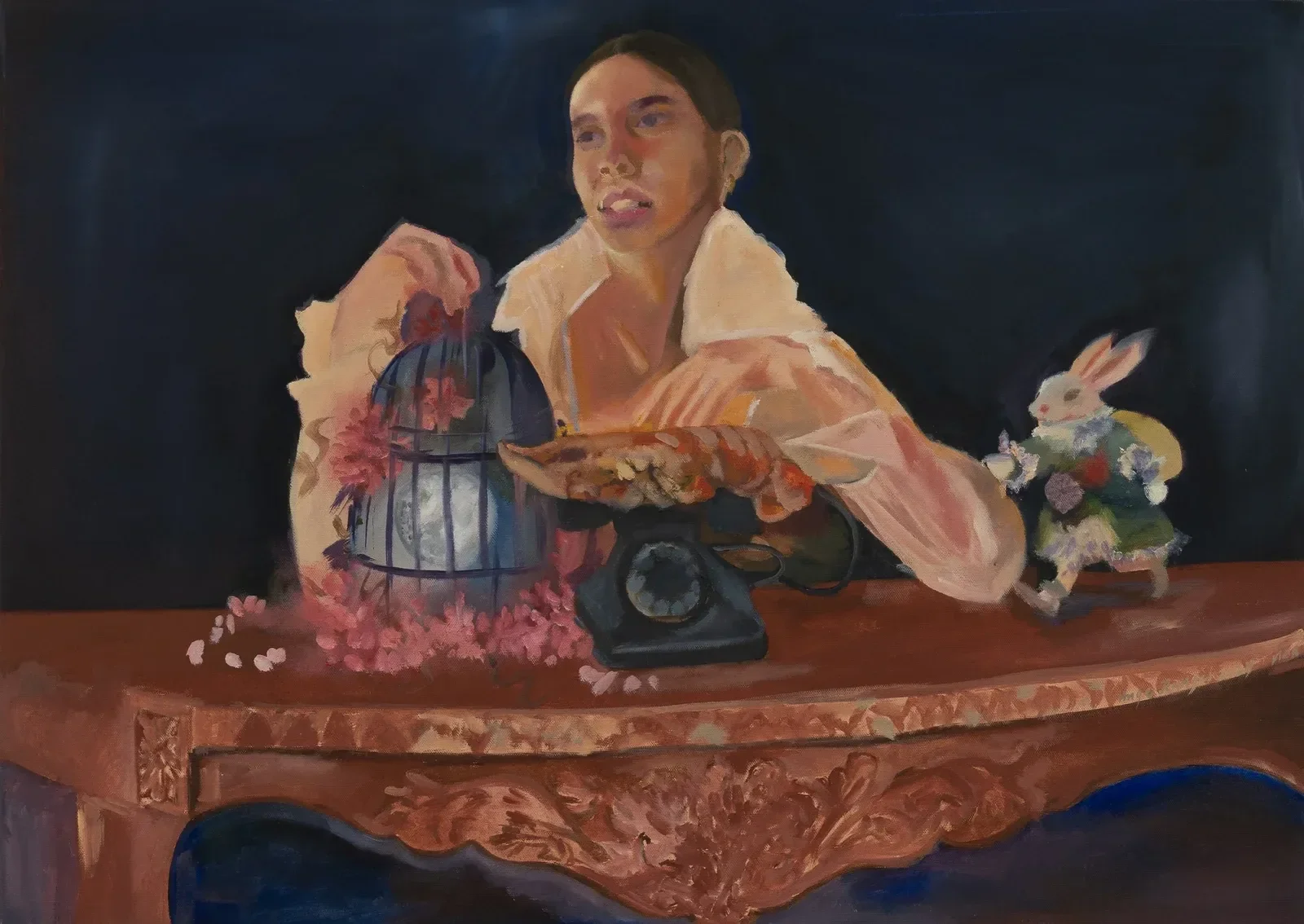
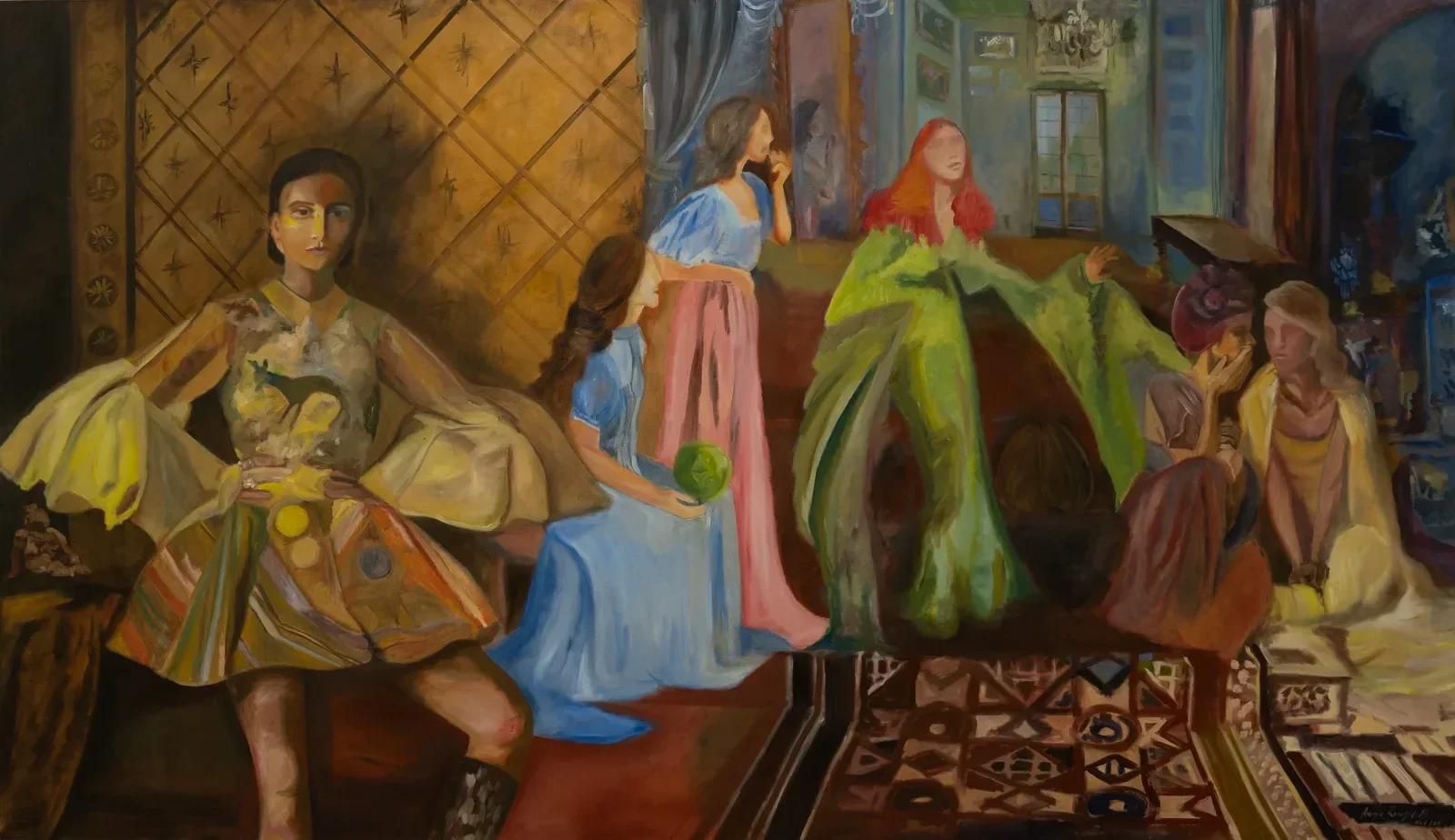
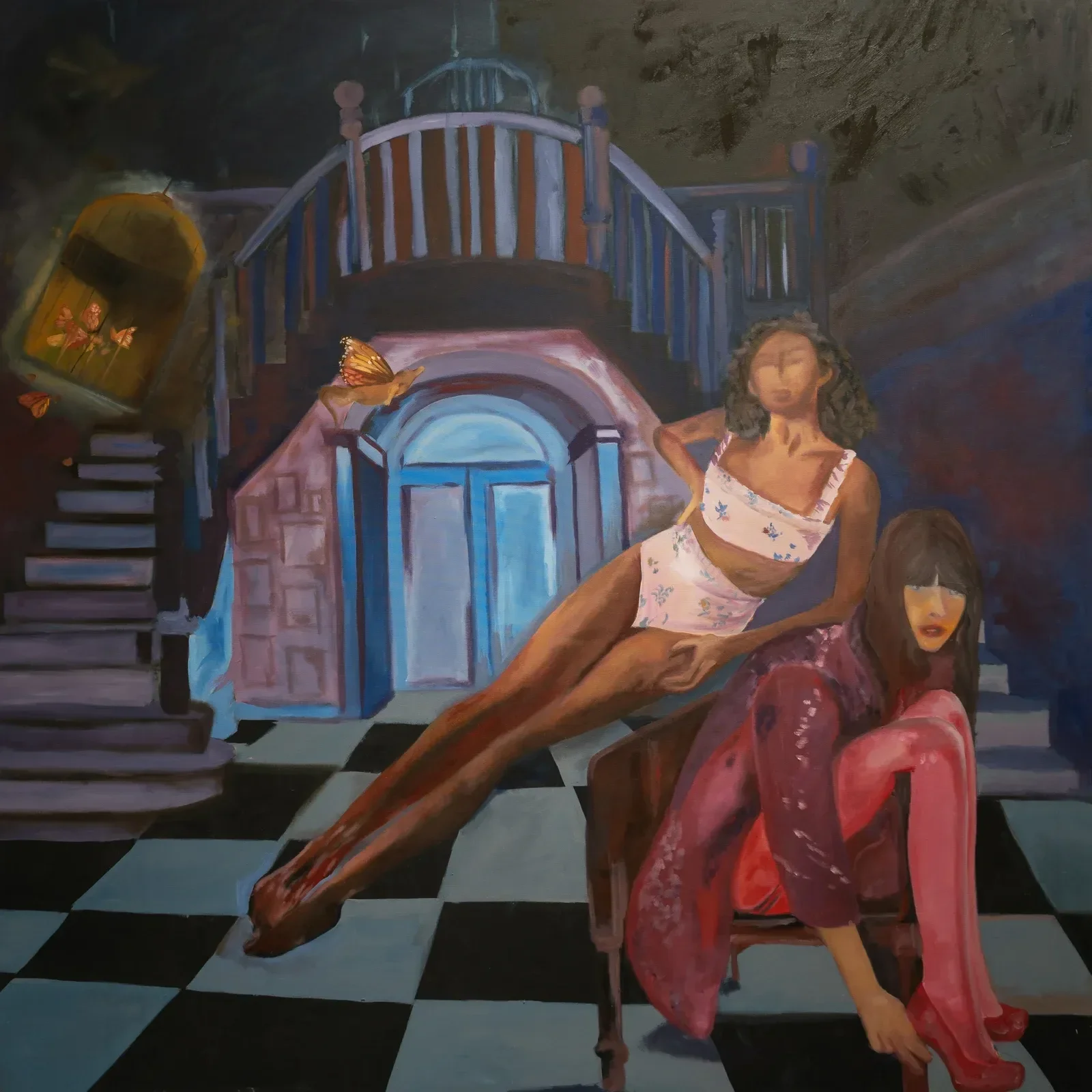
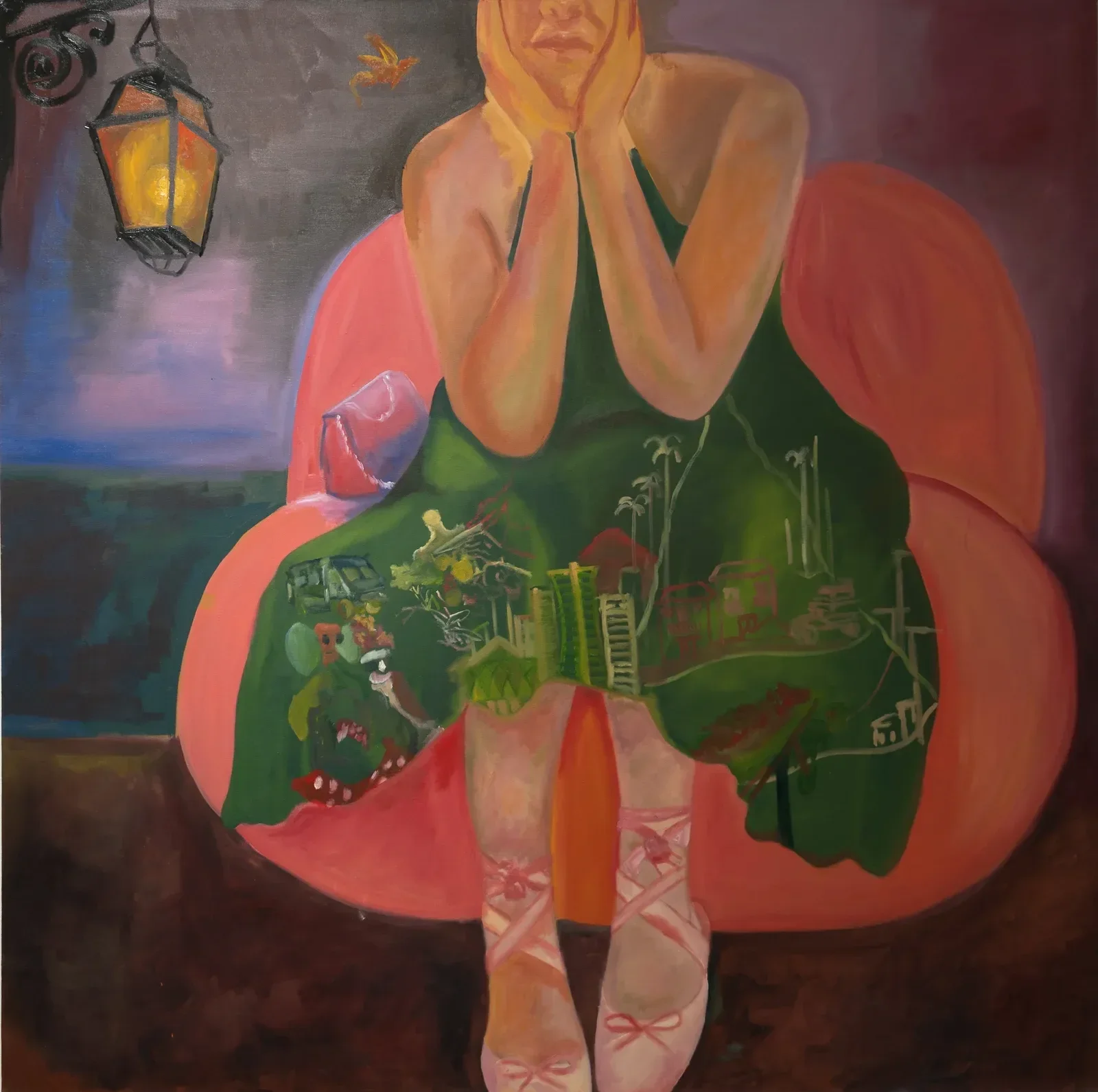
There is a Greek myth that places the origin of painting in the hands of a woman. In Pliny the Elder's Natural History, there is an account about the origin of painting in which a maiden named Kora traces the outline of her lover's shadow before he leaves for war. Whether the myth is true or only legend, what is undeniable is that painting has always been a worker of memory, helping preserve what we consider of great value. Vincent wanted to preserve his boots, Séraphine Louis wanted to preserve her flowers, and Modigliani his beloved women.
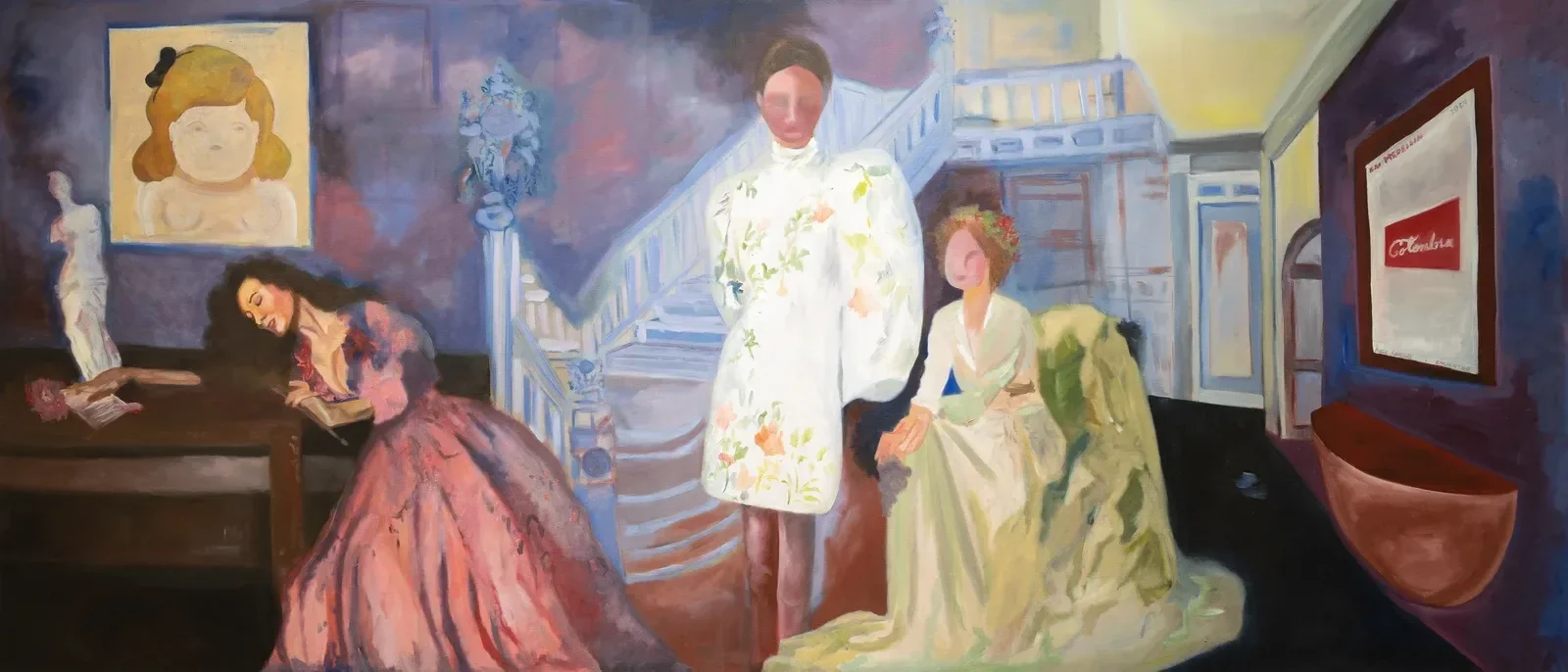
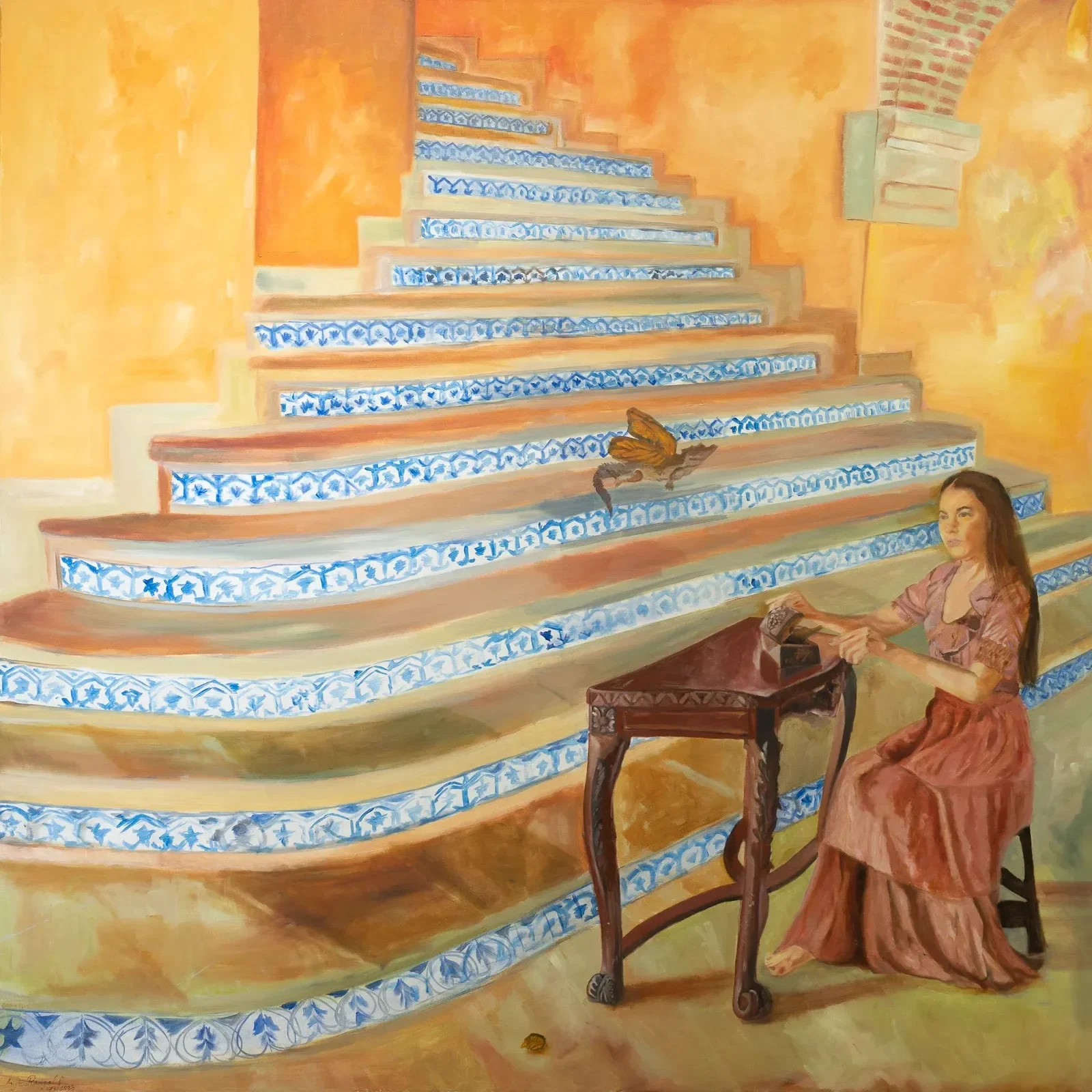
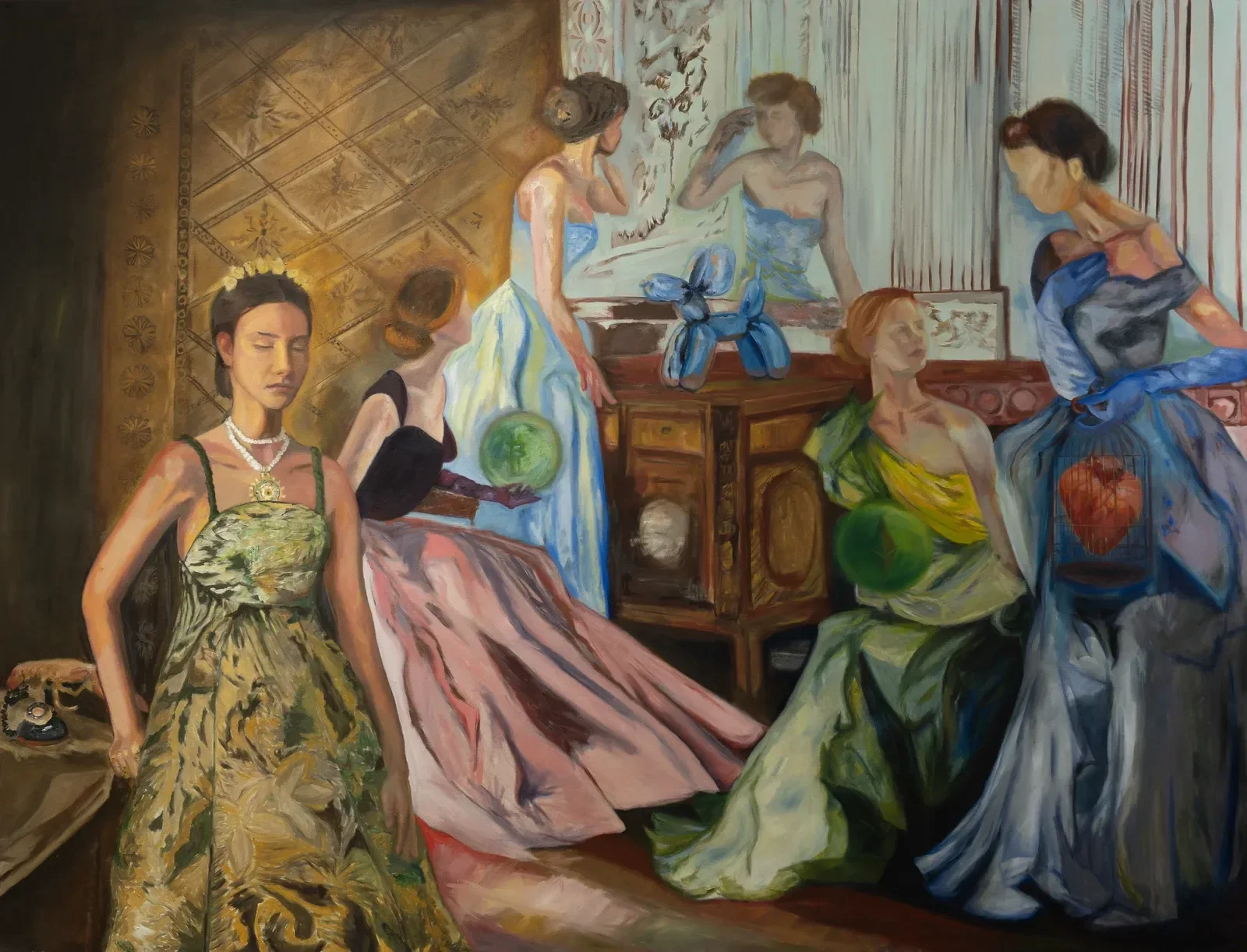
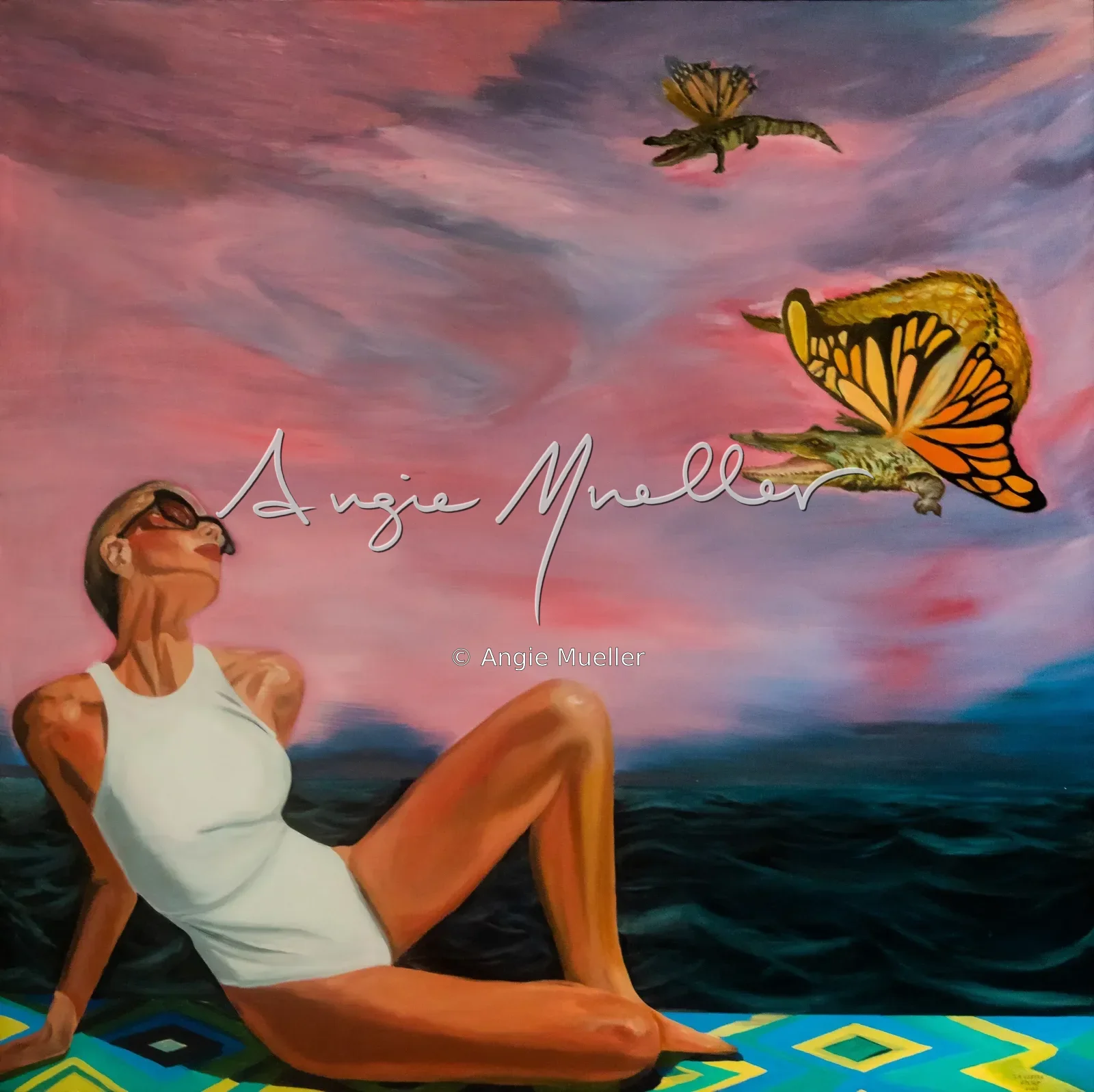
Angie Rangel, who begins her path in art through painting, integrates it into her daily life, studies it, and approaches its enigmas in order to crystallize, through it, the moments that have marked her process as an artist and as a woman who has traveled through different places, among them her city of origin, Barranquilla. Thus, in her proposal we see a mixture of dreams and realities that highlight the architectures and ornaments of her former homes, evoking life alongside her grandmother, her childhood, the warm climate, and that Macondo-like atmosphere that merges with a new way of life through art, where unsettling pieces appear that evoke Jeff Koons or Botero, hinting at her arrival in the city of Medellín. It is precisely this that conjures the encounters that run through her life and her work, and that, like a "diary," she records in words on the back of her paintings, so that each experience remains contained in both text and image, fulfilling the full sense of evocation.
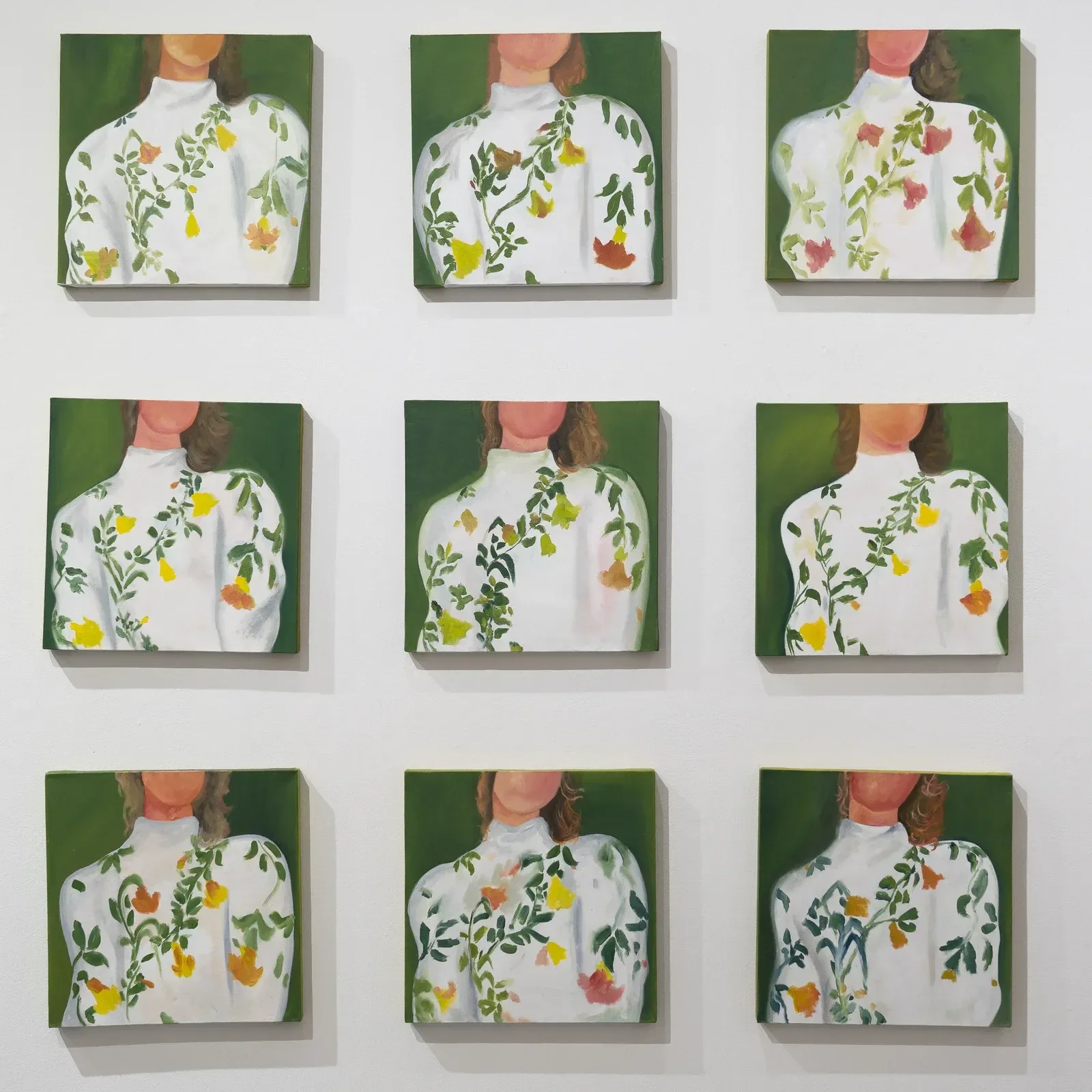
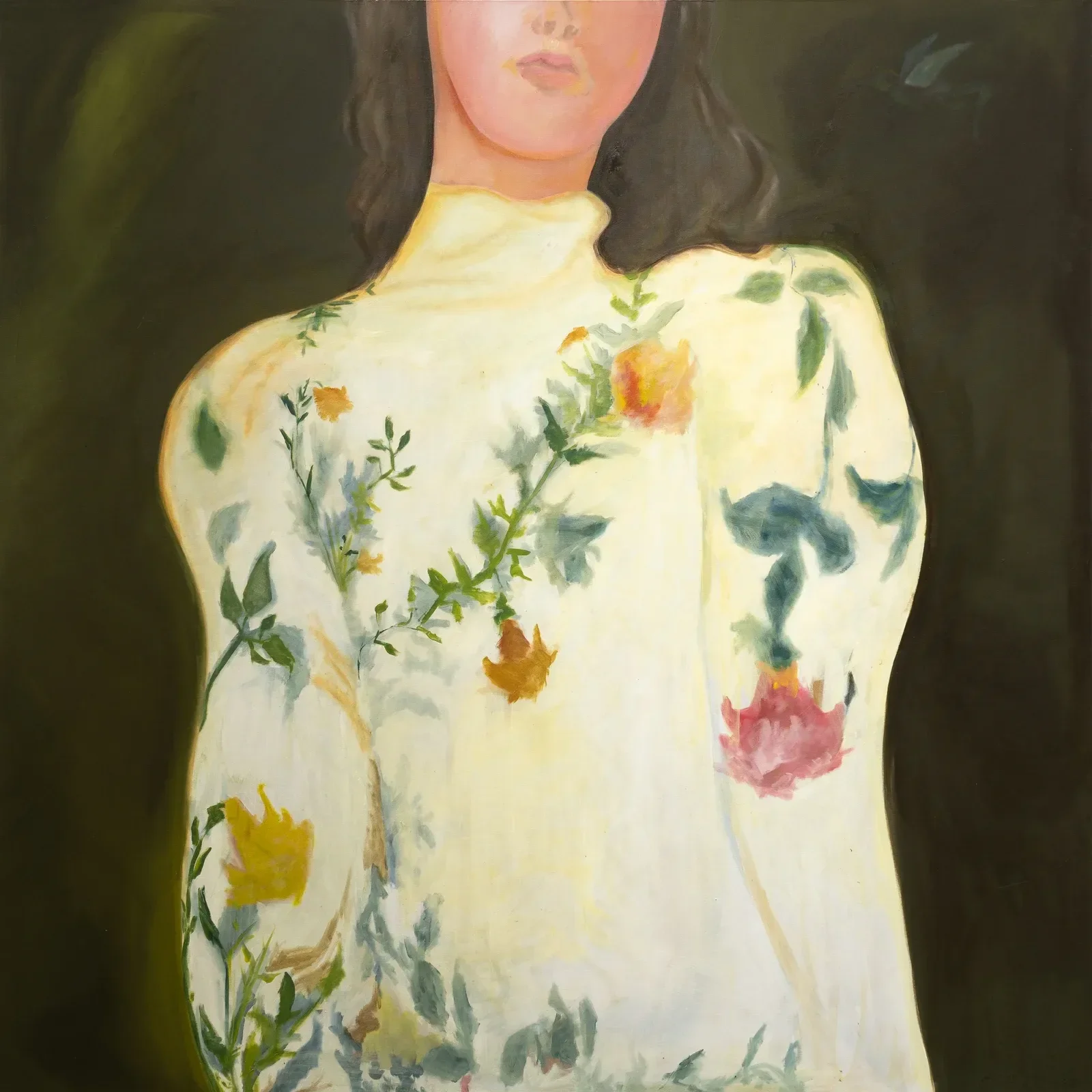
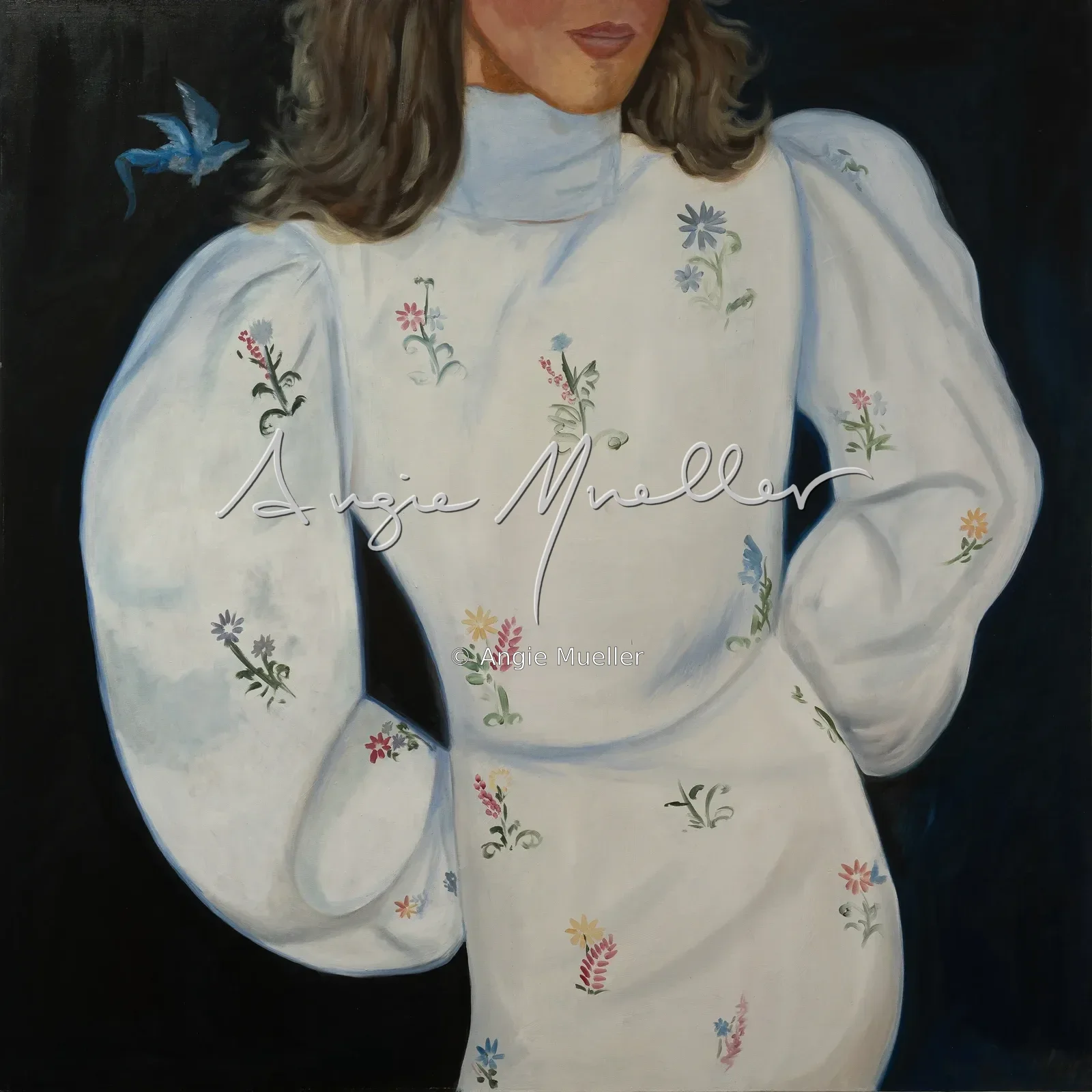
There is also, in her work, a special fondness for paintings of women. Another latent encounter with her femininity, with her ideals and with other women, where she explores with them her delight in clothing, attire, and the fusion between painting and fashion, reminding us of the exuberant stage costumes portrayed by painters of past centuries, dressing them in garments full of flowers, textures, ruffles, and, once again, memories. These encounters are the meaning of this exhibition, and they are the becoming of her life as an artist and as a woman in a city that inspires movement, femininity, and art.
— Úrsula Ochoa, Master in Aesthetics, Art curator and critic
"Her paintings act like an archive of personal experiences, memories, and desires. Rangel blends elements of folklore, art history, and family narrative to construct compositions rich with her own lore, welcoming viewers into the period rooms of her mind which encourage us all to reflect on our own constellations of personal inspirations."